
Gluco Gold ingredients explained, one by one
What is in Gluco Gold? Six named actives, six printed amounts and no proprietary blend. Here is what each one is and why it sits on the label.
Gluco Gold ingredients, per three-tablet serving: berberine hydrochloride 1,000 mg (BerberPure), oleoylethanolamide (OEA) 250 mg, chromium 200 mcg as chromium polynicotinate, white mulberry leaf extract 100 mg, cinnamon cassia bark extract 75 mg and banaba leaf extract 48 mg. Each one has its own amount, and there is no proprietary blend.
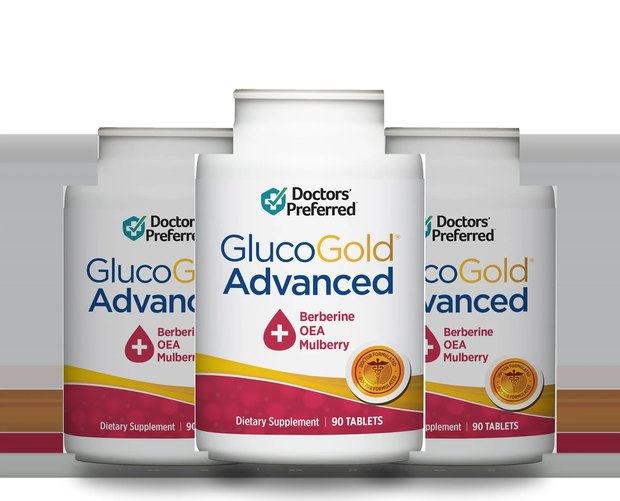
Gluco Gold ingredients at a glance
| Ingredient | Per 3 tablets | Main job |
|---|---|---|
| Berberine HCl (BerberPure) | 1,000 mg | How cells handle glucose |
| Oleoylethanolamide (OEA) | 250 mg | Fullness signal |
| Chromium (polynicotinate) | 200 mcg (571% DV) | Insulin signalling support |
| White mulberry leaf (1% DNJ) | 100 mg | Slowing starch breakdown |
| Cinnamon cassia bark | 75 mg | Blood sugar territory |
| Banaba leaf (1% corosolic acid) | 48 mg | Slowing the meal |
Berberine: the largest Gluco Gold ingredient
Berberine is a plant alkaloid. Here it comes as berberine hydrochloride from Berberis aristata bark and root, sold under the BerberPure name. At 1,000 mg it is the biggest amount on the panel by far.
Berberine is studied for how cells handle glucose and lipids. It is the reason the formula stands out, and also the reason for most cautions. Its known drawback is the stomach, and this label puts the full gram into one sitting. We cover that in our first-month side effects guide.
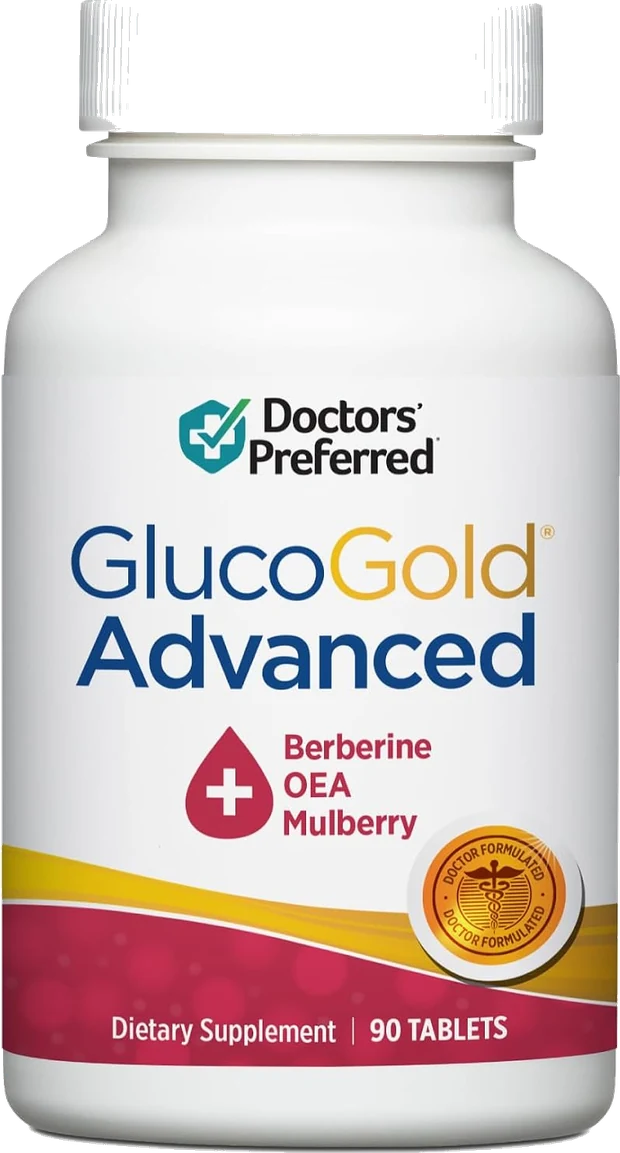
About the product behind this post
GlucoGold Advanced is a once-daily tablet with six printed amounts and no proprietary blend. It is a supplement, not a medicine, and the full label is on this site before you order.
See the current priceRead the label firstGlucogolds earns a commission on orders placed through this site. Not for pregnancy or nursing. Dietary supplements are not reviewed by the FDA before sale.OEA and chromium: the fullness and signalling pair
Oleoylethanolamide (OEA), 250 mg. OEA is a fat the small intestine makes after eating. The body uses it as a fullness signal. It is the newest name on this panel, and 250 mg is a properly studied amount.
Chromium, 200 mcg. Chromium works in the same insulin signalling territory as berberine. The label shows 571% of the Daily Value. That number looks large only because the Daily Value for chromium is 35 mcg. 200 mcg is a common amount in chromium research.
Mulberry, cinnamon and banaba: the meal-timing trio
White mulberry leaf extract, 100 mg. It is standardised to 1% 1-deoxynojirimycin, or DNJ. That gives 1 mg of DNJ per serving. DNJ slows the gut enzymes that break starch into sugar, which is why the serving goes before a meal.
Cinnamon cassia bark extract, 75 mg. Cassia is the common cinnamon in North America. It works in the same blood sugar territory. It carries no standardisation percentage on this label, so the 75 mg cannot be turned into an amount of one compound.
Banaba leaf extract, 48 mg. It is standardised to 1% corosolic acid, which is 0.48 mg per serving. This is the smallest amount on the panel, and we say so openly.
New to the numbers in brackets? Read how to read a standardisation percentage.
The other ingredients in Gluco Gold tablets
The label also lists croscarmellose sodium, microcrystalline cellulose, dicalcium phosphate, hypromellose, silica, magnesium stearate, glycerin and hydroxypropyl cellulose.
None of these is active. Croscarmellose sodium helps the tablet break apart once swallowed. Cellulose and dicalcium phosphate give the tablet its body. Hypromellose and hydroxypropyl cellulose form the coating. Silica and magnesium stearate help manufacturing, and glycerin softens the coat.
The label also notes that colour can vary between bottles. Berberine is a strong yellow pigment, and plant extracts differ batch to batch. That is normal.
Why printed amounts matter more than a long list
Many products in this category hide most of the formula inside a proprietary blend. You see one total weight and the order of the names, but never the amounts.
GlucoGold does the opposite. Six actives, six numbers. You can take the bottle to a pharmacist and get a real answer, because there is a real number beside every name. See every line on our supplement facts page or the full ingredients page.
How to take it: three tablets once a day, before a meal. A 90-tablet bottle gives 30 servings. If you take any medicine, show the panel to your doctor or pharmacist first.
Want to see the label in full?
Start with one bottle, which is 30 servings. The price is shown at checkout, and returns follow the window on the listing.
See the current priceRead the label firstGlucogolds earns a commission on orders placed through this site. Not for pregnancy or nursing. Dietary supplements are not reviewed by the FDA before sale.Gluco Gold ingredients: common questions
What are the main Gluco Gold ingredients?
Berberine hydrochloride 1,000 mg, OEA 250 mg, chromium 200 mcg, white mulberry leaf 100 mg, cinnamon cassia bark 75 mg and banaba leaf 48 mg per three-tablet serving.
Does Gluco Gold use a proprietary blend?
No. Every active ingredient has its own printed amount, so each dose can be checked.
Why does chromium show 571% of the Daily Value?
The Daily Value for chromium is 35 mcg, and the serving has 200 mcg. The large percentage reflects a small reference figure, not an extreme dose.
Our view on the Gluco Gold ingredients
The Gluco Gold ingredients list is short and clear. Berberine leads at a full gram, OEA and chromium support it, and three plant extracts work around the meal. Every amount is printed.
That clarity is the best reason to read the label before you buy. If you plan to try it, our how to take it page covers timing and storage, and the Amazon listing check covers buying safely.
Last updated November 6, 2026. This page is general information, not medical advice. Dietary supplements are not reviewed by the FDA before sale.